Facets of a Wandering Mind: A Meta-Analysis of Task-Related Interference and Learning
08/2025
·
1 min read
Abstract
During learning, learners experience both task-related and unrelated thoughts. While previous research has primarily focused on task-unrelated thoughts (TUT or mind wandering), off-task thoughts sometimes also have some connection to the task (task-related interference, TRI). This meta-analysis aimed to determine the occurrence of TRI and TUT combined these into an overall frequency of off-task thoughts, and examined their relationship with learning outcomes. The meta-analysis analysed 28 samples, employing meta-analysis of single means to determine frequency and a mixed-effects model to investigate correlations. Results show that TRI occurs 23% of the time and shows no correlation with learning outcomes. TUTs occur 29% of the time and negatively correlate with learning outcomes. An additional meta-analysis indicates that off-task thoughts collectively occur 51% of the time and are negatively correlated with learning outcomes. These results highlight the importance of considering TRI when studying off-task thoughts, as unlike TUTs, they do not appear to influence the learning process negatively. The result is that learners engage in off-task thoughts for 51% of their learning time, which has significant implications for educational practices.
Date
08/2025
Event
Location
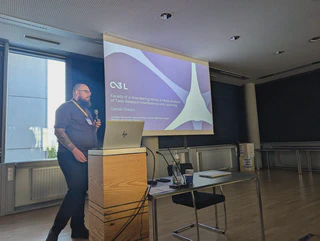
EARLI 2025, Graz, Austria